
From Research to Bedside: The Development Journey of a Novel Prostate Device

Prostate Device Development: From Research to Bedside
A new prostate device does not arrive in a urologist's office because an engineer had a good idea. It arrives because a team spent years converting a clinical observation into a design specification, proving that specification on the bench, surviving regulatory review, and then persuading payers that the procedure is worth paying for. Almost all of that work is invisible in the finished, sterile-packaged product.
This article walks that path stage by stage. It covers what prostate device development actually demands in engineering and evidence terms, how the evidence ladder is climbed from burst-pressure testing to sham-controlled randomized trials, what the FDA and European pathways cost in time and money, and why reimbursement — not engineering — is frequently the step that decides whether a device ever reaches a patient.

What Prostate Device Development Actually Involves
Benign prostatic hyperplasia is not a rare condition, which is precisely why the device market is crowded. Histologic evidence of BPH is present in roughly half of men in their fifties and in as many as 90 percent of men over 80, and a meaningful share of those men develop lower urinary tract symptoms that push them toward treatment. The clinical need is obvious. The engineering problem is not.
A prostate device has to work inside an anatomy that varies enormously between patients. Design inputs therefore start with measurement: prostate volume, prostatic urethral length, the configuration of the lateral and median lobes, bladder neck geometry, and the distance from the verumontanum to the external sphincter. In the randomized trials that supported today's minimally invasive surgical therapies, enrolled prostate volumes typically ran from about 20 to 80 grams — a range that is itself a design constraint, because a device sized for one end of that spectrum may fit badly at the other. The consequence is a sizing grid, usually derived from transrectal ultrasound, that becomes part of the procedure rather than a footnote in the instructions.
Then come the mechanical specifications. A transurethral dilation or implant system must pass a working channel or sheath without traumatizing the urethra on the way in, which sets a limit on wrap profile and shaft stiffness. Once in position it must deliver a controlled force: balloon diameter, working length, inflation pressure and the burst-pressure margin above it are all specified, verified and documented. Materials selection — nylon, silicone, Pebax, PTFE and hydrophilic coatings — is driven less by elegance than by how each candidate behaves under repeated cycling, ethylene oxide sterilization and shelf life.
Industry surveys of device companies put average concept and proof-of-concept work at roughly 20 months for a product on the 510(k) track. That figure covers the period in which the mechanism is settled. Everything after it is execution.

The Evidence Ladder: From Bench Testing to Randomized Trials
Device developers talk about an evidence ladder because each rung answers a narrower question than the rung below it, and no rung can be skipped.
Bench testing. Biocompatibility under ISO 10993, particulate characterization, corrosion and material leachables, sterilization validation with ethylene oxide residuals, accelerated aging for shelf-life claims, burst and fatigue testing, and simulated-use testing in anatomical models. None of this looks like medicine. All of it is what a reviewer reads first.
Preclinical models. Cadaveric work establishes anatomy and access. Animal work establishes that the mechanism does in a living urethra what it did in a fixture. The historical record here is instructive: transurethral dilation of the prostate was first explored in animal experiments and early clinical work in the mid-1980s, and the first American reports of balloon dilation in men with BPH followed in 1987 alongside canine experiments on the prostatic urethra.
First-in-human case series. Small, uncontrolled series measure safety and provide the signal that justifies a bigger study. An early endoscopic balloon dilation series reported 42 patients at six months of follow-up — enough to support the technique, not enough to prove durability.
Randomized and sham-controlled trials. This is where a device earns its label. A within-subject or open-label series cannot separate a real effect from the substantial placebo response that any prostate procedure generates: the act of being instrumented, the catheter, the anticipation of relief and the regression to the mean of fluctuating symptom scores all move the numbers. Sham control is what makes the result credible.
The sham-controlled trial that revived prostatic balloon dilation is the clearest modern example. A drug-coated balloon system combining mechanical dilation with localized paclitaxel delivery reported an average IPSS reduction of 10.7 points — about 45 percent — at three months and 12.1 points, roughly 52 percent, at 12 months, against a sham procedure, with a Qmax improvement described at the time as the highest reported in a BPH minimally invasive trial. Two-year follow-up from the same randomized study was published in 2024, and the system received FDA approval in June 2023. The mechanism was 1980s technology. The evidence package was what made it a product.
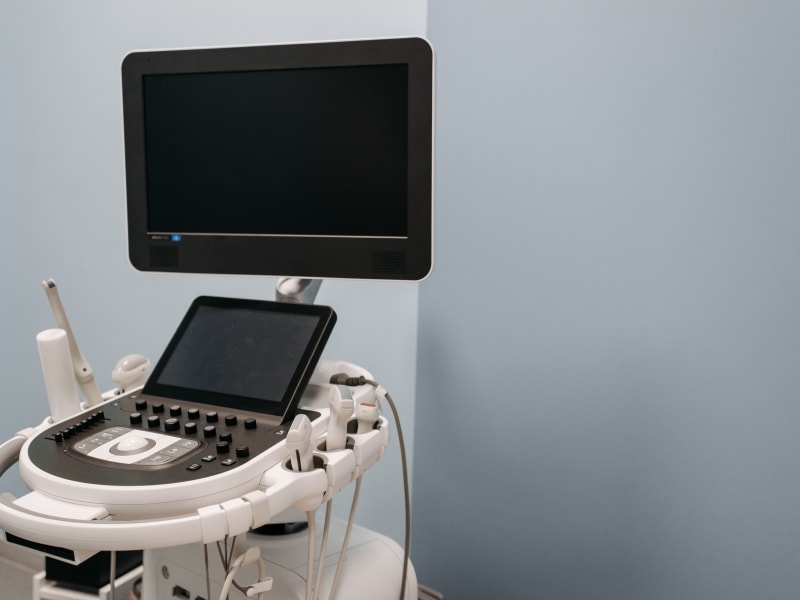
Regulatory Pathways and the Cost of Proving Safety
Three American pathways dominate. A 510(k) premarket notification argues substantial equivalence to a legally marketed predicate, and the evidence burden is largely comparative. De Novo classification exists for novel devices of low to moderate risk that have no predicate, and it creates one for the next developer. Premarket approval applies to the highest-risk class and requires independent proof of safety and effectiveness from clinical data.
Timing is the part developers most often get wrong in planning. Median FDA 510(k) review time has been reported at approximately 108 calendar days in 2024, against an MDUFA V performance goal of deciding 95 percent of submissions within 90 FDA days. Independent 2025 analyses have placed average review time closer to 140 to 175 days, with 70 to 80 percent of submissions exceeding the 90-day target. Assume the slower distribution, not the median.
Cost follows the pathway. Survey work on medical device companies found that the average funding raised to bring a 510(k) product from concept to clearance exceeded $31 million, with more than three-quarters of that — roughly $24 million — spent on regulatory and FDA-linked activities rather than on invention. For devices requiring premarket approval, the comparable figure has been estimated around $94 million, with clinical development alone absorbing about half. A separate ASPE analysis of complex devices put average clinical study costs near $32 million, around 59 percent of R&D spending. The pattern is consistent: the idea is cheap, and proving the idea is not.
Europe is not a shortcut. The European Commission's eighteenth notified body survey, reporting data through October 2025, counted 33,175 applications submitted against only 17,549 MDR certificates issued, and notified bodies report an average of 13 to 18 months for a successful certification review, longer for complex devices. A developer who files in Europe expecting a fast second market should plan for a second regulatory program.

Reimbursement: The Step That Decides Whether a Device Reaches Patients
A cleared device with no payment pathway is a prototype with paperwork. This is where most prostate device development programs stall, and where the design decisions made years earlier either pay off or don't.
The prostatic urethral lift is the textbook example of designing for the payment system. Its implant procedure carries dedicated CPT codes with a zero-day global period, meaning related post-procedure visits can be billed separately. Under the Medicare physician fee schedule, the national unadjusted allowed amount for the initial implant in the office setting runs to about $1,245 with roughly $864 for each additional implant — versus about $184 and $44 respectively when the same codes are reported in a facility. The office setting is where the economics work. A device engineered for a hospital operating room inherits hospital cost structures and hospital site-of-service payment, which is a different business.
The cautionary example is the older code for transurethral balloon dilation of the prostatic urethra. It was deleted in 2008 after the procedure, as originally performed, failed to demonstrate durable clinical effectiveness and was rarely used. Losing a code is not merely a billing inconvenience: it removed the payment pathway for an entire mechanism in the United States for fifteen years.
Two practical conclusions follow for anyone planning a prostate device today. First, decide the intended site of service — office, ambulatory surgery center, or hospital outpatient department — before the design freeze, because it determines both the engineering envelope and the economics. Second, treat coding and coverage evidence as a development deliverable with its own timeline, typically measured in years, that runs in parallel with the regulatory submission rather than after it.
| Development stage | The question it must answer | Typical duration |
|---|---|---|
| Clinical needs assessment | Which patients, which anatomy, which unmet outcome? | 6–12 months |
| Concept and design | Does the mechanism work in real materials at real scale? | 12–20 months |
| Bench and preclinical testing | Does it survive pressure, fatigue, biocompatibility and sterilization? | 12–24 months |
| Regulatory submission and review | Is it substantially equivalent, or genuinely novel? | 3–18 months of review |
| Clinical evidence | Does it beat sham or standard care under control? | 2–5 years |
| Coding, coverage and reimbursement | Will anyone pay for it, and in which setting? | 1–5 years |
What the Balloon Dilation Story Teaches the Next Generation
Balloon dilation of the prostate is the most instructive case study in this field because it was abandoned and then rebuilt rather than simply replaced.
| Year | Milestone |
|---|---|
| 1984 | Transurethral dilation of the prostate explored in animal experiments and early clinical work |
| 1987 | First American reports of balloon dilation in men with BPH; experimental dilation of the prostatic urethra in dogs |
| 1990 | Endoscopic balloon dilation series reports 42 patients at six months |
| 1993 | Randomized trial compares balloon dilatation with transurethral resection of the prostate |
| 2008 | CPT code for transurethral balloon dilation of the prostatic urethra is deleted |
| 2023 | FDA approves a drug-coated prostatic balloon system, reviving the mechanism with a durability strategy |
The mechanism was never the problem. Compressing or splitting the obstructing lobes restores flow immediately, and the early series showed it. What failed was durability: the commissure healed, scar tissue formed, and the compressed tissue recoiled, so symptoms returned. Lengthy follow-up eventually exposed that weakness, and the technique was withdrawn from routine practice.
The revival worked because it attacked durability directly. Combining mechanical dilation with localized drug delivery was intended to hold the channel open during healing, and the developers paid for a sham-controlled design that could prove the effect rather than merely describe it. Modern device development is therefore as much a discipline of hypothesis and measurement as it is of hardware: the durability hypothesis has to be stated before the trial, and the endpoint has to be able to falsify it.
That is also the design logic behind lobe-specific transurethral dilation platforms, including the three-lobe prostate dilation systems built by Nexusuro, which target lateral and median lobe obstruction through the urethra without a permanent implant, in a setting where recovery and reimbursement both favor the office.
The hurdles above are not theoretical. For a device developer, an investor, or a clinician evaluating a new prostate device, the honest question is not "does it work?" but "at what level of evidence, in which patients, at which site of service, and paid for by whom?"

Frequently Asked Questions
How long does it take to develop a prostate device?
Realistically three to seven years from concept to commercial sale for a moderate-risk device, and longer for anything requiring premarket approval. Concept and proof-of-concept work alone averages close to 20 months. Add regulatory review of 3 to 18 months, clinical follow-up of two to five years, and coding and coverage work that often continues after launch, and a decade from first sketch to broad adoption is not unusual. The reimbursement clock is routinely underestimated because it starts late and runs long.
How much does it cost to bring a BPH device to market?
Survey data on device companies put average funding to bring a 510(k) product from concept to clearance above $31 million, with more than three-quarters of that spent on regulatory and FDA-linked activity rather than on invention itself. Devices on the premarket approval track have been estimated near $94 million, roughly half of it clinical development. Complex device clinical studies alone average around $32 million, about 59 percent of R&D spending. A minimally invasive prostate device with a modest clinical program sits at the lower end, but the six-figure and seven-figure line items are the rule, not the exception.
What regulatory pathway does a prostate dilation device usually take?
Most transurethral prostate devices are Class II and reach the market through the 510(k) route by demonstrating substantial equivalence to a legally marketed predicate. A mechanism with no reasonable predicate — a genuinely new mode of action or a novel drug-device combination — may require De Novo classification instead, which is more work but creates the predicate for everyone who follows. In the European Union, the same device needs an MDR certificate from a notified body, which currently averages 13 to 18 months of review.
What testing is required before a prostate device can be used in humans?
At minimum: material characterization and biocompatibility testing under ISO 10993, sterilization validation including residual limits for the chosen method, accelerated aging to support shelf-life claims, mechanical performance testing such as burst pressure, tensile strength, fatigue and simulated use, particulate and leachables assessment, and a risk analysis that traces each failure mode to a control. Preclinical animal work in a relevant model follows before any first-in-human case series.
Why was balloon dilation of the prostate abandoned in the 1990s?
The immediate results were acceptable, but durability was not. After dilation, the commissure healed, scar tissue formed and the compressed tissue recovered its shape, so symptoms returned within months to a few years. Because the effect could not be sustained, use fell away and the dedicated payment code was deleted in 2008. The mechanism was later revived by combining dilation with localized drug delivery intended to keep the channel open during healing, and by proving the result in a sham-controlled randomized trial rather than an open-label series.
Will insurance pay for a new prostate device?
Not automatically. Coverage usually depends on demonstrated clinical benefit, a specific procedure code, and a defined site of service. Established minimally invasive prostate procedures carry their own CPT codes and are widely covered when medically necessary, with the highest allowed amounts typically in the office setting. New mechanisms generally begin as investigational for many payers, which means the developer must fund a coverage and coding strategy alongside the regulatory submission. Verify medical necessity criteria and prior authorization requirements before scheduling.
Take a Prostate Device From the Bench to the Bedside
Prostate device development is a decade-long argument that has to be won four times: on the bench, in a controlled trial, at the regulator, and with the payer. The devices that reach patients are not the ones with the best mechanism alone — they are the ones whose developers planned the evidence and the economics at the same time as the hardware.
Nexusuro builds three-lobe prostate dilation systems for clinicians who treat benign prostatic hyperplasia in an office-based, implant-free setting. To review device specifications, discuss clinical evidence and training, or explore distribution and partnership in your market, contact partner@nexusuro.com or visit www.nexusuro.com.
Frequently Asked Questions
How long does it take to develop a prostate device?
Realistically three to seven years from concept to commercial sale for a moderate-risk device, and longer for anything requiring premarket approval. Concept and proof-of-concept work alone averages close to 20 months. Add regulatory review of 3 to 18 months, clinical follow-up of two to five years, and coding and coverage work that often continues after launch, and a decade from first sketch to broad adoption is not unusual. The reimbursement clock is routinely underestimated because it starts late and runs long.
How much does it cost to bring a BPH device to market?
Survey data on device companies put average funding to bring a 510(k) product from concept to clearance above $31 million, with more than three-quarters of that spent on regulatory and FDA-linked activity rather than on invention itself. Devices on the premarket approval track have been estimated near $94 million, roughly half of it clinical development. Complex device clinical studies alone average around $32 million, about 59 percent of R&D spending. A minimally invasive prostate device with a modest clinical program sits at the lower end, but the six-figure and seven-figure line items are the rule, not the exception.
What regulatory pathway does a prostate dilation device usually take?
Most transurethral prostate devices are Class II and reach the market through the 510(k) route by demonstrating substantial equivalence to a legally marketed predicate. A mechanism with no reasonable predicate — a genuinely new mode of action or a novel drug-device combination — may require De Novo classification instead, which is more work but creates the predicate for everyone who follows. In the European Union, the same device needs an MDR certificate from a notified body, which currently averages 13 to 18 months of review.
What testing is required before a prostate device can be used in humans?
At minimum: material characterization and biocompatibility testing under ISO 10993, sterilization validation including residual limits for the chosen method, accelerated aging to support shelf-life claims, mechanical performance testing such as burst pressure, tensile strength, fatigue and simulated use, particulate and leachables assessment, and a risk analysis that traces each failure mode to a control. Preclinical animal work in a relevant model follows before any first-in-human case series.
Why was balloon dilation of the prostate abandoned in the 1990s?
The immediate results were acceptable, but durability was not. After dilation, the commissure healed, scar tissue formed and the compressed tissue recovered its shape, so symptoms returned within months to a few years. Because the effect could not be sustained, use fell away and the dedicated payment code was deleted in 2008. The mechanism was later revived by combining dilation with localized drug delivery intended to keep the channel open during healing, and by proving the result in a sham-controlled randomized trial rather than an open-label series.
Will insurance pay for a new prostate device?
Not automatically. Coverage usually depends on demonstrated clinical benefit, a specific procedure code, and a defined site of service. Established minimally invasive prostate procedures carry their own CPT codes and are widely covered when medically necessary, with the highest allowed amounts typically in the office setting. New mechanisms generally begin as investigational for many payers, which means the developer must fund a coverage and coding strategy alongside the regulatory submission. Verify medical necessity criteria and prior authorization requirements before scheduling.
Continue reading


Stay informed on BPH MIST developments
More articles on clinical evidence, technology pathways, and international market observations.