
UroLift retreatment rate: what the 5-year data shows.
Retreatment rate is one of the most important metrics for evaluating BPH treatment durability. Here's what published studies tell us — with honest context about data maturity across all MIST options.

UroLift retreatment rates — LIFT study data
| Time point | Retreatment rate | Context |
|---|---|---|
| 1 year | ~5–10% | Symptom improvement unsatisfactory or early recurrence |
| 3 years | ~15–25% | Gradual accumulation over time |
| 5 years | ~20–30% | LIFT study 5-year follow-up; ~70–80% of patients need no additional intervention |
| 5+ years | Data accumulating | Long-term follow-up beyond 5 years remains limited |
Data sourced from LIFT study published literature. Individual results vary.
How other MIST options compare
| Treatment | 1-year | 3-year | 5-year | Data maturity |
|---|---|---|---|---|
| UroLift | ~5–10% | ~15–25% | ~20–30% | Extensive (10+ years) |
| Nexusuro | 0.9% | Data accumulating | Data accumulating | Building |
| Rezūm | ~5–12% | ~15–20% | ~15–25% | Strong (7+ years) |
| iTind | ~5–10% | Data accumulating | Data accumulating | Building |
| TURP (reference) | <5% | ~5–10% | ~5–15% | Extensive (decades) |
Data sourced from respective product clinical studies. Nexusuro long-term data is actively being collected.
What retreatment actually looks like
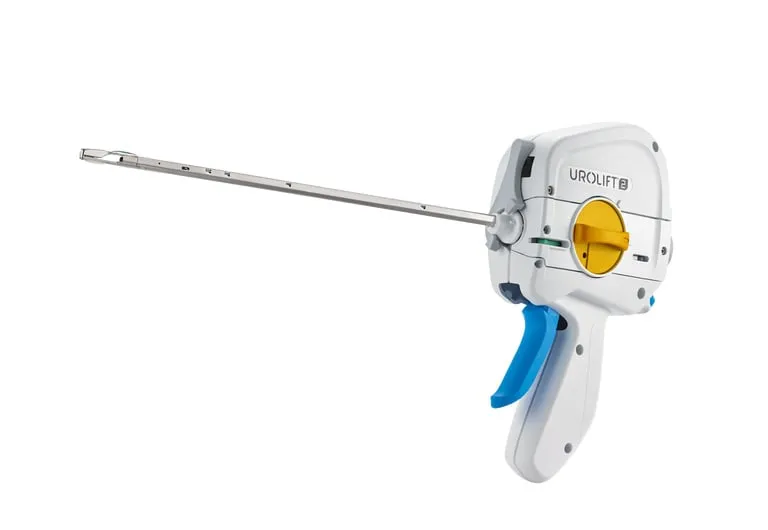
The word sounds alarming, but understanding the specific forms of retreatment is more useful than fixating on a single number. Most cases are managed without major surgery.
Medication restart
Most common form. Resume or adjust alpha-blockers or 5ARI for symptom control — simplest, least invasive option.
Repeat MIST
Same or different MIST procedure. UroLift patients can receive additional implants; Nexusuro patients can repeat dilation.
Step-up to TURP/Laser
Planned escalation years later. Not a failure — many patients choose MIST first knowing this path exists.
Active surveillance
For mild recurrence, watchful waiting with periodic IPSS monitoring is a valid and common choice.
Continue exploring
This page provides informational comparison based on published literature. Retreatment rates vary by study design, patient population, and follow-up methodology. Consult a licensed physician for treatment decisions.